

Hi friends, I’m excited to be back for another blog tour today and this time it’s for an upcoming graphic novel memoir! I’m here to share my thoughts as part of the blog tour hosted by Toppling Stacks Tours for Until We Meet Again by Lily Kim Qian.
Thanks to First Second Books for providing a digital ARC via NetGalley in exchange for an honest review!
Click the banner above or here to check out the other incredible bloggers on the blog tour!
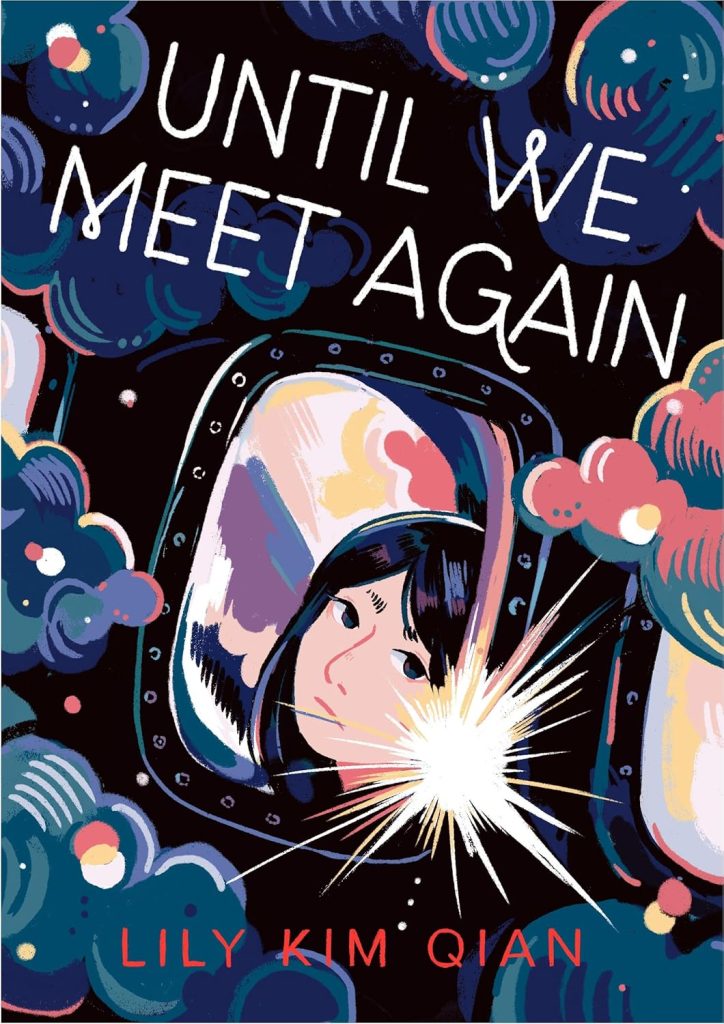
Until We Meet Again
Publisher: First Second Books
Publication Date: 21 April 2026
Genre: Memoir
Rep: Chinese, AAPI, Depression
📖 SYNOPSIS
A poignant and vividly illustrated graphic memoir about a young woman’s search for belonging as her immigrant family moves between Canada and China.
Lily isn’t sure where home is anymore. Her family is constantly on the move, resettling in different towns across Canada and, eventually, in Shanghai, China. Her father plays the role of primary caregiver while her mother is absent for long periods of time. When she reappears, her strange behavior turns Lily’s life upside down. As Lily enters her college years, she strives to better understand her family and her place in the world. But can she escape the inherited trauma passed down by her immigrant parents?
📚 BUY A COPY
⚠️ CONTENT/TRIGGER WARNINGS
Trauma, mental health struggles


Until We Meet Again is a heartfelt and introspective memoir. The author reflects on her childhood moving from state to state, coming-of-age in a place that should feel like home but doesn’t quite, and dealing with a parent who struggles with mental health. The way the story is written feels almost cathartic to the author. I don’t know if that’s the right way to put it, but there was so much vulnerability reflected on the pages, and recounting what she’s been through felt like a release, or at the very least another way to process her experiences. I don’t know if this was written with younger audiences in mind either, but I think it would be suitable, as the author touches on heavier topics without diving too deeply.
It was heartbreaking to read about her relationship with her mother, but I loved the depiction of a fairly healthy relationship between father and daughter. What I especially appreciated was how the author drew attention to the stigma of mental health in Asian culture—something which is still prevalent today, especially with older generations. A lot of what she said about it rang true to my own experiences—you push it aside so you pretend it doesn’t exist and that the person who has mental health issues, in a way, doesn’t exist beyond someone to pity or politely ignore. It was sad, but thankfully, it seems that those who most needed help in her story got it in the end and to this day are doing much better for it.
The reason this piqued my interest because I too am a child of frequent moves and I always seek out stories about people who have experienced something similar, if not had a mirror experience to my own. I wished that she had delved deeper into her experience of the diaspora child returning to her “home country”. There were a few things about language and expectations from the people are you (based on how you present, your name, etc.) that did ring true to my own experience, but I think it would’ve been nice to get a deeper reflection on how that changed her perspective about her upbringing and experiences.
Ultimately though, I did enjoy this memoir. The art style was vivid and rich in colour and expression. The combination of colour and illustration created stunning and visceral imagery, and I think did a great job of emphasizing the turmoil she experienced in her childhood, and other experiences growing up. You could feel the confusion, fear, and frustration, but also the quiet, peaceful and healing moments in the author’s journey.
Read More »
